Why Customers Give Up When They Can’t Find Basic Business Information
Customers are careful with their money. If they cannot quickly check who you are, what you do and how to contact you, many will quietly move on.
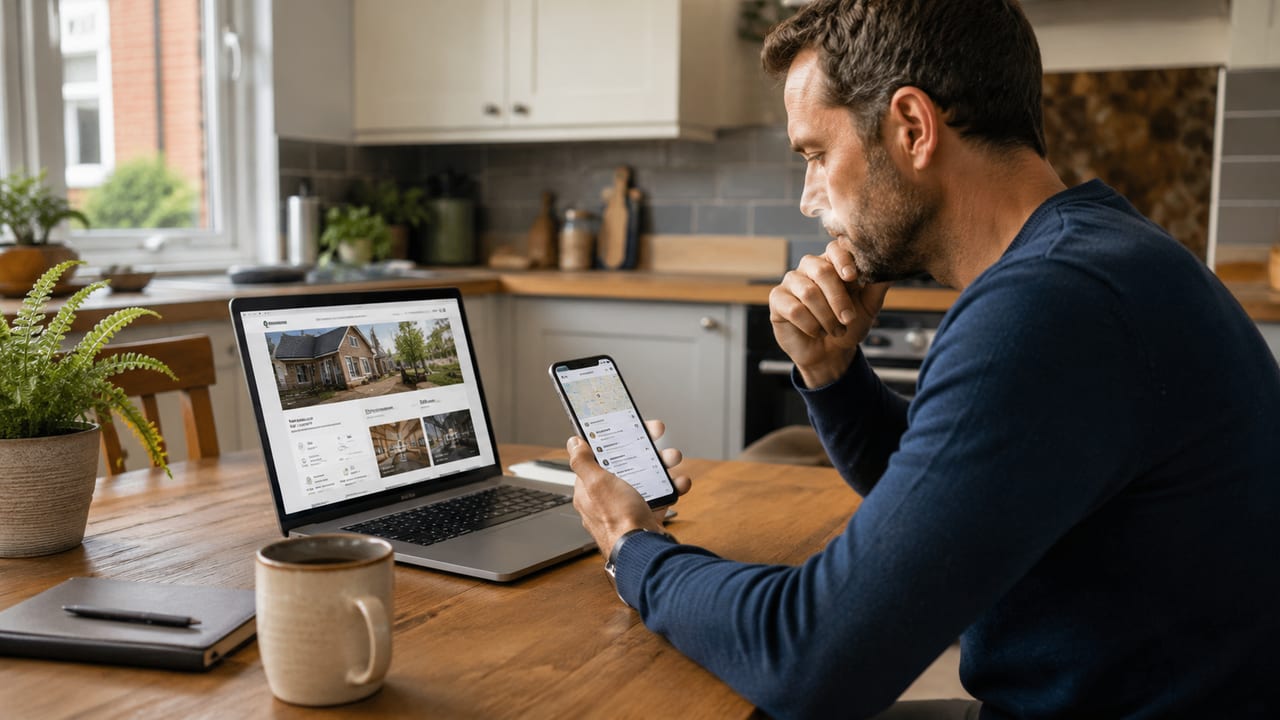
Customers are not sheep. They do not all think the same way, buy the same way, or trust a business for the same reasons.
Some people will happily ask for a recommendation in a Facebook group and book the first name that comes up. Others will take that recommendation, search the business name, look for a website, check reviews, browse photos, and try to work out whether the business feels genuine.
That is not them being awkward. That is them being careful with their hard-earned money.
Most people have seen enough to know that not every business is what it claims to be. They may have watched programmes like Rogue Traders, read horror stories in local newspapers, or known someone who paid a deposit and never saw the person again. They may have had a bad experience themselves.
So when someone is looking for a local business, especially a trade or service they are trusting with their home, their money or their safety, trust matters. And trust does not begin when you turn up at the door. It begins before they contact you.
“Message me on Facebook” is not always enough
There is nothing wrong with using Facebook for business. For many local businesses, it is useful. It can show activity, personality, photos, recommendations and updates.
But “just message me on Facebook” can create anxiety for some customers. What are they meant to ask? What information should they already know? Are you available? Do you cover their area? Are you insured? Do you have examples of your work? Do you have proper contact details? Is this a business, a side job, or someone who might disappear after the work is done?
For some people, messaging a stranger directly feels like a bigger step than filling in a form, calling a listed number, or reading more information first. It puts the pressure on the customer to start the conversation without knowing enough.
That is where people quietly drop off. They do not always complain or tell you what put them off. They simply move on to another business that gave them more reassurance.
A recommendation is helpful, but is it enough?
Word of mouth is powerful. Nobody is saying otherwise.
If someone says, “I used them and they were great,” that can be a strong starting point. But ask yourself honestly: would you spend your own money purely because someone else said something was good?
Sometimes, yes. But often you would still check.
You might search the business name. You might look for a website. You might check reviews. You might look at photos. You might see whether the details match up across Google, Facebook and elsewhere.
That is normal customer behaviour. It is not suspicious or unfair. It is what many of us do before spending money, especially when the job matters.
So if a customer hears your name, then looks you up and finds very little, unclear information, no website, no proper details, old posts, missing contact information, or a page that does not explain what you actually do, that recommendation has suddenly lost strength.
The trust was started by someone else, but your online presence needs to continue it.
Put yourself in the customer’s shoes
It is easy for a business owner to think, “Once I speak to them, they’ll know I’m genuine.”
That might be true. But what if they never get that far?
Before a customer contacts you, they are trying to answer basic questions. Do you look real? Do you do the thing they need? Do you cover their area? Can they see examples? Can they contact you easily? Do other people trust you? Are you still active? Do you look like someone who takes the business seriously?
If they cannot answer those questions quickly, it creates doubt. And doubt is often enough to stop an enquiry.
Not because the customer is stupid. Not because they are being picky. Because they are protecting themselves.
A van and a mobile number are not much of a trust signal
There was a time when many businesses and trades seemed to take their online presence more seriously. They had websites, clear contact details, proper information, and made an effort to look established.
Now, far too many seem to think none of that is needed.
A van, a mobile number, and a Facebook page might be enough for some people. But it is not enough for everyone. Anyone can put a number on a van. Anyone can start a page. Anyone can say they are reliable.
That does not mean they are.
This is the hard fact: customers know there are rogues out there. They know some people take shortcuts. They know some people vanish when there is a problem. They know some people can look convincing for just long enough to get the job.
No system is perfect, of course. A website does not magically prove someone is honest. Reviews can be faked. Social media can be polished. Even professional-looking businesses can let people down.
But generally speaking, rogues and cowboys do not want a clear trail. They are less likely to build a proper online presence that points back to them. Less likely to show consistent details. Less likely to explain who they are, what they do, where they work, and how people can contact them.
That is why visibility matters. A genuine business should not hide from being checked.
Basic information should not be hard to find
Customers should not have to dig around to find out what you do. They should not have to scroll through two years of Facebook posts to find a phone number, guess whether you cover their area, or message you just to ask for basic information that could have been clearly shown online.
At minimum, a local business should make these things easy to find:
- Your business name
- What services you offer
- Where you work
- How to contact you
- When you are usually available
- Examples of your work
- Reviews or testimonials
- A simple explanation of what happens next
That does not need to be fancy. It just needs to be clear.
The clearer you are, the easier it is for someone to trust you enough to take the next step.
Your website does not need to be flashy. It needs to reassure people.
A lot of small business owners hear the word “website” and imagine something expensive, complicated or over the top.
But for many local businesses, the job of a website is much simpler. It gives people somewhere solid to land. It explains what you do. It shows that you are a real business. It supports your Google listing. It backs up your Facebook page. It answers questions before the customer has to ask them.
Most importantly, it gives cautious people a reason to feel more comfortable contacting you. For people relying on a phone, the smartphone-only customer guide shows why those basics need to be especially easy to find and use.
That is the point. A website is not just there to look nice. It is there to reduce doubt. The Get Trusted overview sets out the wider checks that help a cautious customer feel sure about a business.
Customers are looking for reasons to trust you
When someone searches for a local business, they are not always looking for the cheapest option. They are often looking for the safest option, the clearest option, or the one that feels least risky.
If your business is good, that needs to show before the customer speaks to you. By the time they message, call or fill in a form, they may already have made half the decision. And if they cannot find enough information, they may have made the decision not to contact you at all.
Being visible online is not about showing off. It is not about pretending to be bigger than you are, and it is not about turning a local business into a corporate brand.
It is about giving people enough confidence to take the next step.
Because customers are not sheep. They are people with choices, concerns, bills, bad experiences, and hard-earned money.
If you want them to trust you, help them do it.
Related posts
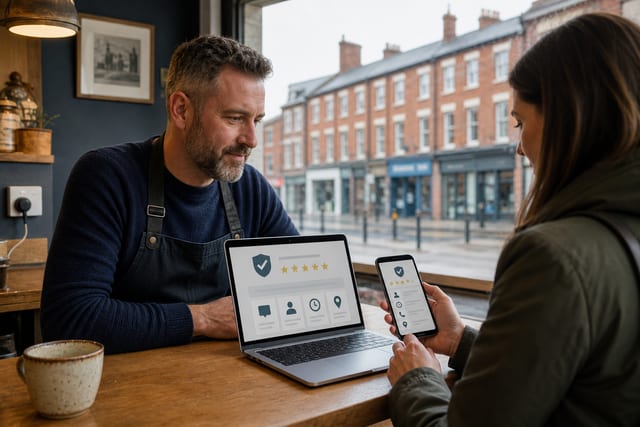
Why Middlesbrough firms cannot afford weak trust signals
In Middlesbrough every local enquiry counts. Weak trust signals online cost businesses customers they can't afford to lose.
Read next
Why your website loses leads after good reviews
Good reviews get people interested. If your website doesn't keep that trust going, they leave before they ever contact you.
Read next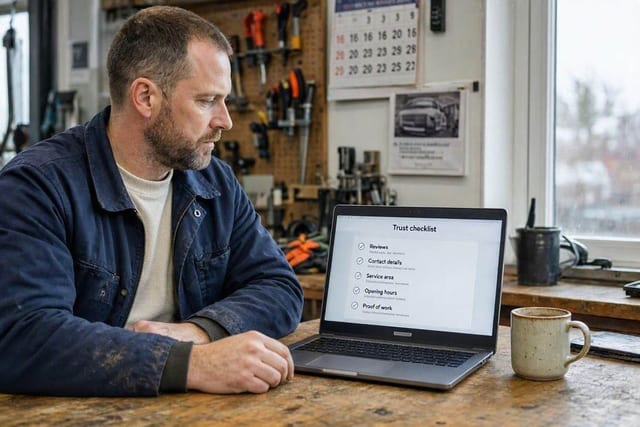
The trust signals every Tees Valley small business website should show in 2026
A practical checklist of the trust signals your small business website should show clearly, and why each one matters to cautious local customers.
Read nextCheck what a customer can find for themselves
Use the 15-question checklist to record which essentials are clear, uncertain or missing across your website and wider online presence.
Use the customer journey checklist