Why Middlesbrough firms cannot afford weak trust signals
In Middlesbrough every local enquiry counts. Weak trust signals online cost businesses customers they can't afford to lose.
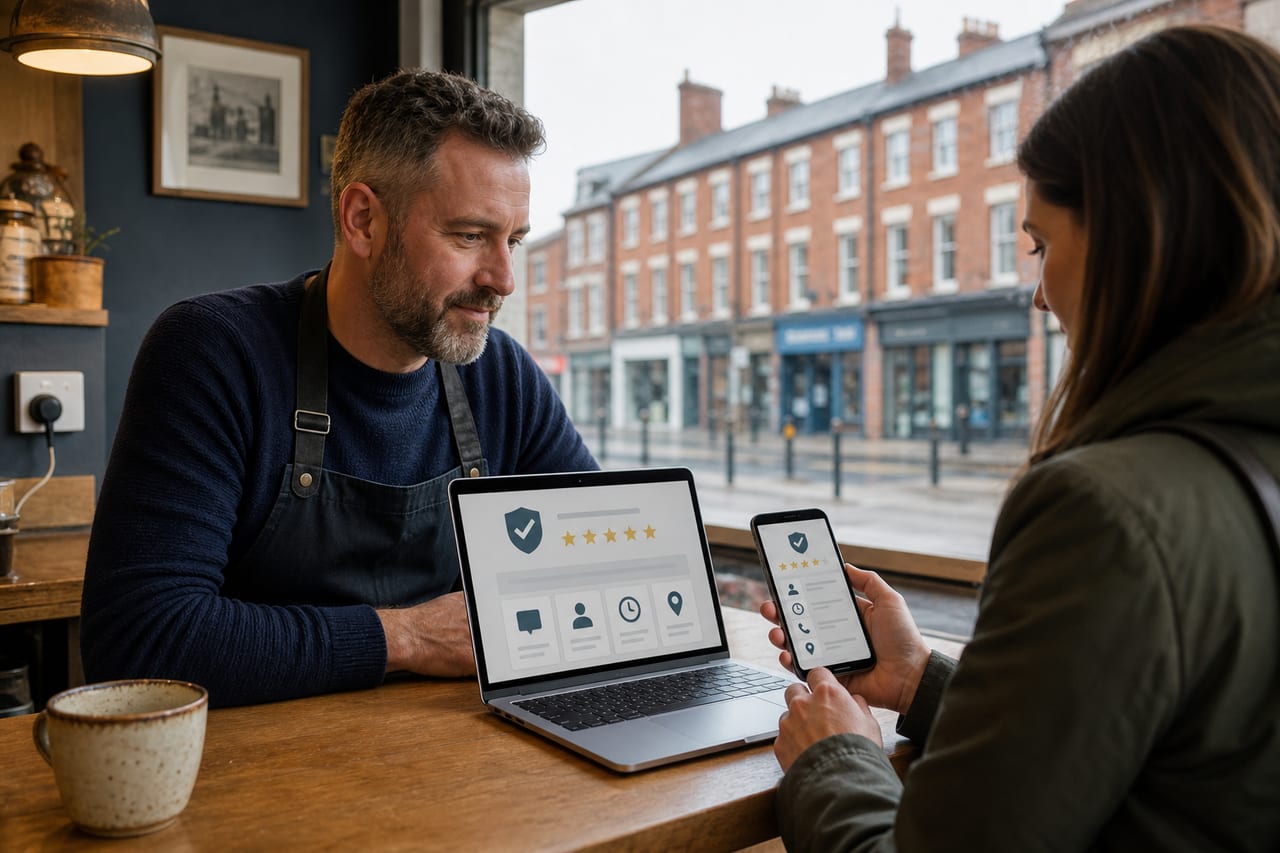
Middlesbrough has always been a place where people get things done. There are skilled tradespeople, hardworking service firms, and plenty of businesses doing proper work for local customers. The town's economic context still makes one thing plain: every enquiry matters, and losing one to a weak online presence hurts more here than it might somewhere with a softer market.
This isn't a dig at Middlesbrough. It's an honest look at the conditions local businesses are working in, and why that makes trust signals online more important, not less.
The local picture
ONS data for Middlesbrough shows an employment rate of 64.4% in the year ending December 2023, with 29.2% economic inactivity and a 6.1% claimant count in March 2024. Those figures sit noticeably below the Great Britain averages and look weaker than some neighbouring areas in Tees Valley. Stockton-on-Tees, for example, had a 74.1% employment rate and Redcar and Cleveland 74.3% in the same period.
That doesn't make Middlesbrough a bad place to run a business. It does mean customers are more careful with their spending, competition for local work is tighter, and there's less room for error when you're trying to win new enquiries.
Across Tees Valley as a whole, Nomis data shows 17,705 enterprises in 2025, with 88.1% of them micro-businesses (fewer than ten employees). Middlesbrough's share of that is a market full of small firms competing for local customers who research before they spend.
When customers are careful, trust signals do more work
Where household budgets are tighter and disposable income is thinner, customers tend to be more cautious. That isn't guesswork. It lines up with the wider evidence on how people research local businesses before spending money.
BrightLocal's trust research found that 62% of consumers would avoid a business if they found incorrect information online, and 63% would lose trust when they saw mostly negative reviews.
For a Middlesbrough business, the practical point is simple. Every bit of friction between someone finding you and actually getting in touch has a real cost. Wrong opening hours, missing contact details, no clear proof you're legitimate, a website that doesn't work well on a phone: these aren't small niggles. In a market where customers have options and reason to be careful, they decide whether you win the job or lose it to someone who looked more trustworthy.
What customers are checking before they get in touch
Evidence on local customer behaviour is fairly consistent. Before contacting a local business, many people check:
- Whether the business looks real and established
- Whether contact details are easy to find
- Whether the services match what they need
- Whether reviews from other customers are positive and recent
- Whether the website matches what Google or other listings show
- Whether the business looks like it's still active and trading
Those are trust checks, not marketing exercises. The customer isn't hunting for the flashiest website. They want enough confidence to pick up the phone or send a message.
Ofcom data shows that 77% of UK adults' online time is on smartphones, and Google Maps is used by 77% of adult smartphone users in a typical month. For Middlesbrough firms, most of these checks happen on a phone, quickly, often while the customer is comparing two or three options. Fail any of them while a competitor passes, and the enquiry goes elsewhere.
The cost of losing enquiries you should have won
For a micro-business, every lost enquiry hits directly. There's no marketing department to run another campaign and no sales team to fill the gap. If someone searched for you, read your reviews, visited your website, then left because something felt off, you were close to winning that customer.
The recurring frustrations in consumer research and online discussions about local businesses stay practical: incorrect hours, unclear services, buried contact details, sites that look abandoned, and not enough proof the business is genuine. These aren't expensive problems to fix. They're information problems. In a market like Middlesbrough's, leaving them unfixed means leaving money on the table.
What Middlesbrough businesses can do
The trust signals that matter most for local customers are also the cheapest and simplest ones to get right. You don't need a big budget or an agency. You need attention to the details cautious customers are actually checking.
Make sure your Google Business Profile is complete and accurate: hours, services, phone number, location, photos. For most local businesses this is the single biggest quick win, and it affects whether people find you and how trustworthy you look in search results.
Check that your website matches your Google listing. If they tell different stories, customers don't know which to believe and many will try someone else. That covers hours, services, phone numbers, and the general impression of what you do.
Show proof that you're real. Photos of work you've actually done, testimonials from real customers, trade body memberships or accreditations, insurance details where relevant. Anything that shows you're an established, legitimate business operating in the area.
Make contact details obvious. Phone number visible without scrolling, tappable on a phone, email easy to find. If you use a form, keep it short. The easier it is to get in touch, the more people will.
Keep things current. A website that hasn't been touched in years suggests the business might not be active. Even small updates, new photos, refreshed testimonials, or a note about recent work can help.
Every enquiry counts here
Middlesbrough's economic conditions leave local businesses with less margin for error. Customers are being careful, and they check firms out online before they commit. That isn't changing.
What can change is how well your business shows up when they look. The trust signals don't need to be perfect or expensive. They need to be present, accurate, and easy to find. In a town where competition for local work is real and every customer matters, that's the minimum.
Search for your own business on your phone. Look at what a customer sees before they get in touch. If anything feels unclear, incomplete, or out of date, use the Middlesbrough business online-help page to work through the sensible first routes.
Related posts

Why your website loses leads after good reviews
Good reviews get people interested. If your website doesn't keep that trust going, they leave before they ever contact you.
Read next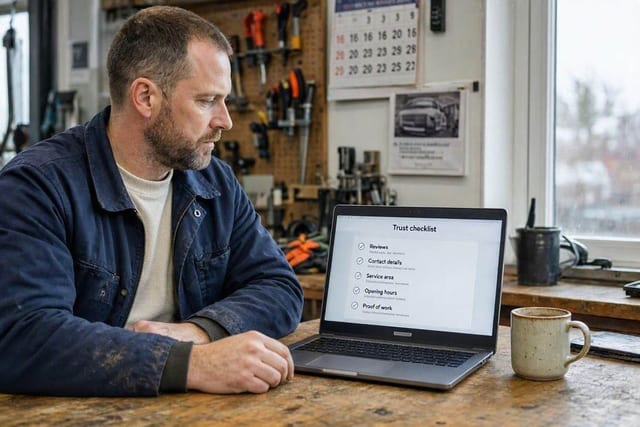
The trust signals every Tees Valley small business website should show in 2026
A practical checklist of the trust signals your small business website should show clearly, and why each one matters to cautious local customers.
Read next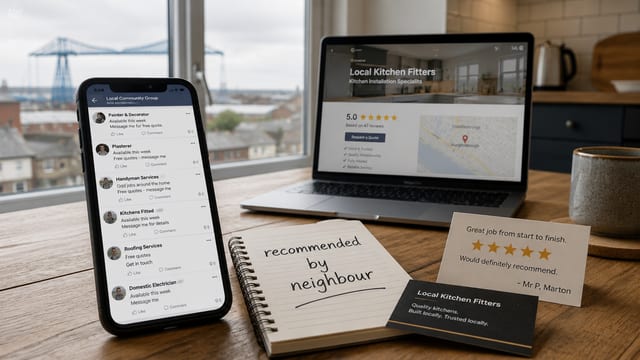
Why Facebook Group Posts Often Don’t Bring Work
Many small business owners post in local Facebook groups, hoping to attract new customers.
Read next