Why your website loses leads after good reviews
Good reviews get people interested. If your website doesn't keep that trust going, they leave before they ever contact you.

You've got strong reviews. People are saying decent things about you on Google, and maybe on Facebook as well. So why isn't the phone ringing more?
One reason that catches a lot of local firms out is what happens after someone reads those reviews. Often the next step is your website. If the site doesn't carry on the confidence the reviews started, the enquiry dies quietly and you never know it was there.
Reviews start the journey, they don't finish it
Plenty of owners assume good reviews close the deal. Someone sees five stars, rings you, job done. The evidence says it's messier than that.
BrightLocal's 2026 survey of 1,002 US adults found that 85% were more likely to use a business after positive reviews, and 54% visited the business website afterwards. From a UK angle, the CMA says online reviews may potentially influence up to £23 billion of annual spending.
So reviews build interest, then a lot of people go looking for more before they commit. The website is usually where they end up.
The mismatch problem
This is where many businesses lose people. A customer reads reviews about great service, reliable work, and friendly communication. Then they hit a site that tells a different story. The design looks tired and hasn't been touched in a couple of years. The services on the site don't match what the reviews talk about. Contact details are buried, or the phone number doesn't match the Google listing.
That mismatch creates doubt. For someone who was genuinely interested, doubt at this stage is often enough to send them somewhere else.
The site isn't a nice-to-have here. It is where a customer can check whether the story in the reviews matches the business in front of them. If it does not hold up, the confidence reviews created can fall apart fast.
Missing details that stop enquiries
When someone arrives from a review, they're usually after a few practical answers. What does this business actually do? Do they cover my area? Can I contact them easily? Does this feel like a real, active firm?
The practical problems are usually wrong or missing hours, unclear services, buried contact details, no proof of legitimacy, and not enough information to decide on a phone screen. Google asks businesses to keep public information such as hours, phone number and location complete and accurate. If a site is awkward on mobile, it puts friction in front of somebody trying to act on a good impression.
Most of these aren't expensive problems. They're information problems. The details live in the owner's head. They just haven't made it onto the website clearly enough for a stranger to find in thirty seconds on a phone.
Poor mobile experience kills momentum
This deserves its own mention because it's so common. Someone's on their phone, they've just read your reviews, they tap through, and the page crawls, the text is tiny, the menu fights them, or they can't find what they need without pinching and scrolling.
Ofcom reports that smartphones account for around three quarters of UK adults' online time. A poor mobile experience puts friction in at the wrong moment, right when someone is trying to confirm a positive impression and take the next step. What mobile-friendly really means goes into the practical side.
No clear next action
Even when a site looks reasonable and the information is there, a surprising number of local business sites still don't make the next step obvious. No clear call to action. No visible phone number. No enquiry form. Nothing that says get in touch.
If someone has already read your reviews and landed interested, make the next step easy. That might be a phone number in the header, a short contact form, a "request a quote" button, or a plain sentence that says "call us" or "send us a message." If they have to work out how to reach you, some of them won't bother.
What reviews promise, your website needs to deliver
Reviews tell a customer what it's like to work with you. Your website needs to confirm that story and give them enough confidence to act. If the reviews say you're reliable but the site looks neglected, there's a gap. If they mention specific services and the site is vague, there's a gap. If they paint you as responsive and professional, but getting in touch is a faff, there's a gap.
Closing those gaps isn't about redesigning the whole site. It's usually about covering the basics. The website trust-signals guide gives you a broader check of the evidence customers look for:
- Services described specifically enough to match what reviews mention
- Contact details visible and easy to use on a phone
- Opening hours that match your Google listing
- Photos of real work, not just stock images
- A clear, simple prompt for the customer to get in touch
A customer-view review checks whether those details still make sense together when somebody arrives from a review.
The reviews are doing their job
If you've got good reviews, you've already done the hard bit. People are saying positive things about your business, and other customers are reading them. That matters.
The question is whether your website is ready to catch the interest those reviews create. For a lot of local firms, especially trades and service businesses across Tees Valley, the honest answer is no. Not because the business is bad, but because nobody has looked at the site through the eyes of a customer who's already halfway to hiring you.
Open your website on your phone, read your best Google review, then try to find the information that review describes on your site. If the story doesn't match, or getting in touch takes more than a couple of taps, that is where the journey starts to lose momentum. The Get Chosen overview sets out the wider decision-path checks.
Related posts
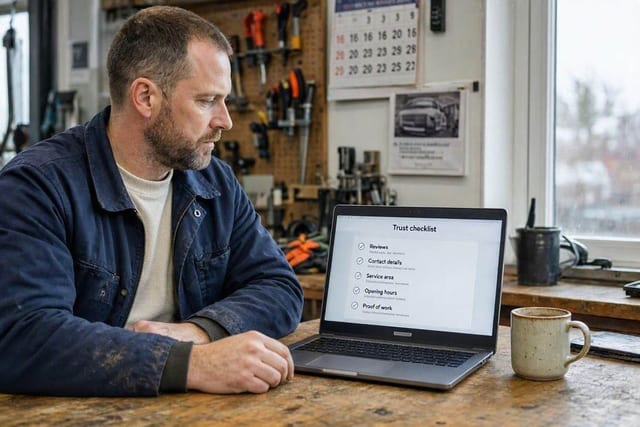
The trust signals every Tees Valley small business website should show in 2026
A practical checklist of the trust signals your small business website should show clearly, and why each one matters to cautious local customers.
Read next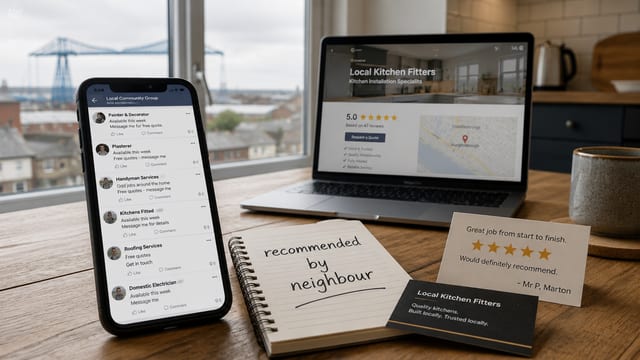
Why Facebook Group Posts Often Don’t Bring Work
Many small business owners post in local Facebook groups, hoping to attract new customers.
Read next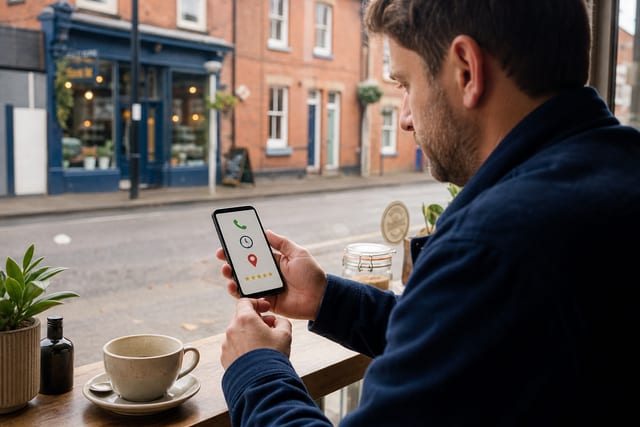
What one in five smartphone-only users means for local websites
One in five UK adults only go online on their phone. If your website is awkward on a small screen, a large share of your customers will struggle to use it.
Read next