How to make a local service business look clearly legitimate online
A practical checklist for trades, home services and professional firms that need customers to trust them quickly before getting in touch.
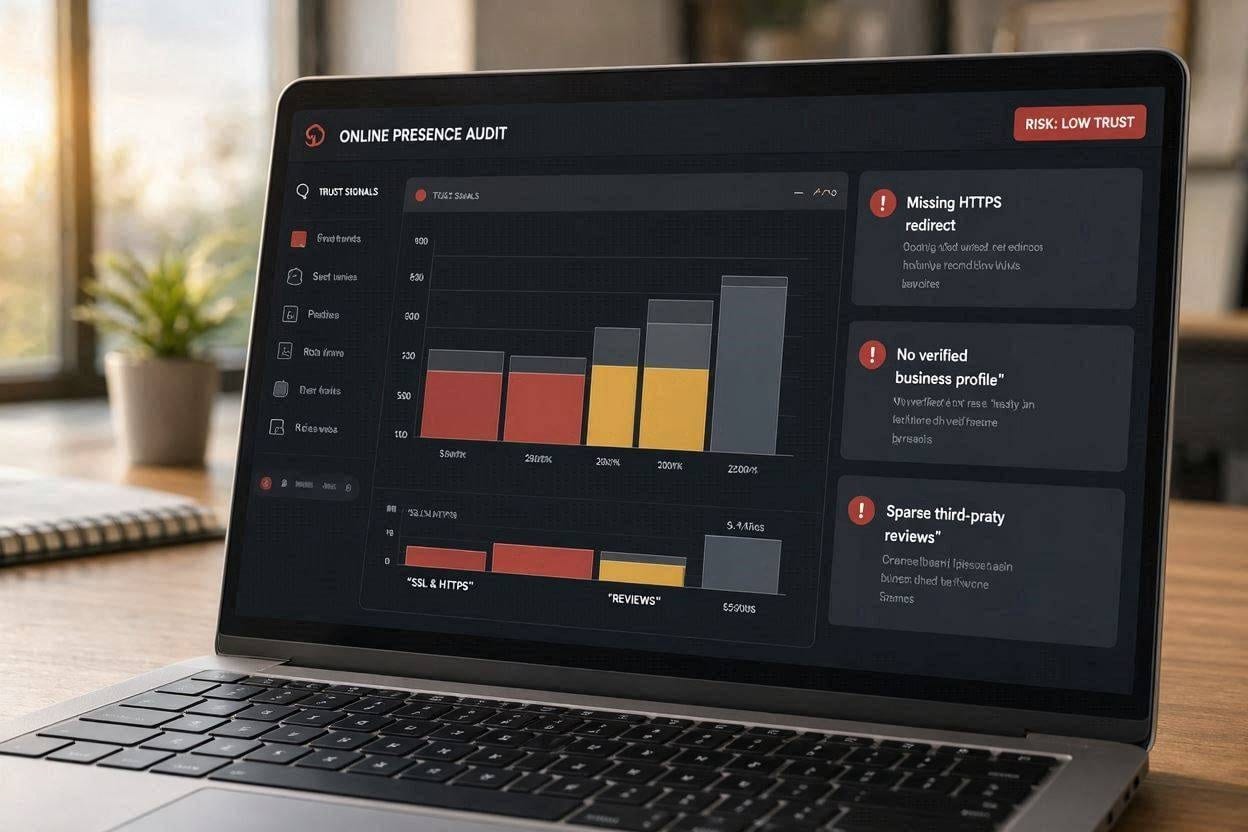
If you run a trade, home service, or professional service business, you already know that customers check you out before they get in touch. They search your name, look at your Google listing, read reviews, and visit your website. They are not being awkward. They have heard enough stories about businesses that do not deliver, and they want to feel confident before they spend their money.
The problem is that many legitimate businesses do not look clearly legitimate online. Not because they are trying to hide anything, but because nobody has gone through their online presence and made sure the right signals are visible. This post is a practical checklist for that.
Why legitimacy matters more for service businesses
When someone buys a product, they can see what they are getting. When someone hires a service business, they are trusting someone to do work they cannot easily verify in advance, often in their home, with their property, or with their money. That trust barrier is higher, and the evidence reflects it.
Consumer discussions about UK trades and local services regularly return to concerns about reliability, no-shows, poor communication, and businesses that look convincing for just long enough to get the job. Those are anecdotal signals, not survey data. Separately, the CMA says online reviews may potentially influence up to £23 billion of UK consumer spending annually, and it is actively enforcing consumer law around online reviews. Customers know that not everything online can be trusted, so legitimate businesses need to make it easy to verify who they are.
For trades and home services especially, the customer's question is not "do they have a nice website?" It is "are they real, are they qualified, and will they turn up?"
The legitimacy checklist
These are the things that help a customer feel confident that your business is genuine, reliable, and worth contacting. They are not expensive or complicated, but they need to be visible. The Get Trusted overview puts the same checks into the wider customer journey.
Business identity
Your full business name, the name of the person or people behind it, and a clear description of what the business does. This sounds obvious, but a surprising number of service business websites do not actually say who runs the business. For a customer trying to work out whether you are a genuine local operator or an anonymous lead-generation site, a real name and a bit of background go a long way.
Location and service area
Where you are based and where you work. For a Tees Valley trade business, that might mean listing the boroughs you cover: Middlesbrough, Stockton, Redcar, Hartlepool, Darlington, and the surrounding areas. Being specific about geography helps customers, and Google's local-ranking guidance says complete, accurate business information helps it understand and match a profile to relevant searches.
Services described specifically
Not "we offer a range of building services" but a clear list of what you actually do. If you fit kitchens, say so. If you do not do gas work, that is worth saying too. Specific service descriptions help customers decide quickly whether you are the right fit, and they help search engines match your business to relevant queries.
Local search practitioners generally advise giving each distinct service its own page or section, with a plain explanation of what it involves, where you do it, and who it is for.
Proof of qualifications and insurance
If your trade requires qualifications, accreditations, or insurance, show them. Gas Safe registration, NICEIC membership, public liability insurance, professional body membership. Customers look for these signals, and showing them on your website and Google profile removes a major source of doubt.
Photos of real work
Stock images of smiling people in hard hats do not reassure anyone. Photos of work you have actually done, in real settings, are far more persuasive. Before-and-after shots work particularly well for trades. Even a few photos taken on a phone can help if they clearly show genuine work.
Reviews and testimonials
Recent, specific reviews from real customers are one of the strongest legitimacy signals a service business can show. BrightLocal's 2026 survey of 1,002 US adults found that 85% were more likely to use a business after positive reviews, and 54% then checked the business website. Reviews create interest, and the website needs to continue the trust they build.
Do not just rely on Google reviews being visible in search. Show testimonials on your website too, ideally with enough detail that they feel genuine: the type of work, the area, the customer's name (with their permission).
Consistent information across platforms
Your Google Business Profile, your website, your Facebook page, and any directory listings should all show the same name, address (or service area), phone number, opening hours, and services. When these do not match, it creates subtle confusion that undermines trust. Google's guidance is clear that business information should be complete and accurate. Keeping your Google profile and website aligned gives you a practical way to check it.
Clear contact routes
Phone number visible on every page, tappable on mobile. Email address easy to find. If you use a contact form, keep it short and let people know what to expect after they submit it. If you prefer calls, say so. If you offer free quotes, make that clear. The easier it is for someone to take the next step, the more likely they are to do it.
A clear "about" section
A few sentences about who you are, how long you have been doing this, and what you care about. Not a corporate mission statement, just enough for a customer to feel there is a real person behind the business. This matters especially for sole traders and small teams, where the business is essentially the person.
How search engines and AI systems see legitimacy
Everything on this checklist helps customers. It also helps Google and AI systems understand your business clearly enough to show it in search results and AI recommendations.
Google does not give this a special name. Its advice is to keep business information complete and accurate so it can match a profile to relevant searches. Structured data can help describe information already visible on a page, but it is not a shortcut. The guide to schema markup for normal businesses explains the sensible limit.
This is the same work as building customer trust, not a separate SEO project. The signals that make customers feel confident are the ones that make your business readable to search engines and AI systems.
What to do with the checklist
Looking legitimate online is not about looking big or corporate. It is about being clear and visible enough that a cautious customer, checking you out on their phone, can quickly confirm that you are a real business, that you do what they need, and that other people have trusted you and been happy with the result.
Most of this checklist costs nothing beyond a bit of time and attention. Go through it with your own business in mind, and if you find gaps, fix the easy ones first. The customer-view review shows how those checks work together. The harder ones are usually worth a conversation.
Related posts
Why Middlesbrough firms cannot afford weak trust signals
In Middlesbrough every local enquiry counts. Weak trust signals online cost businesses customers they can't afford to lose.
Read next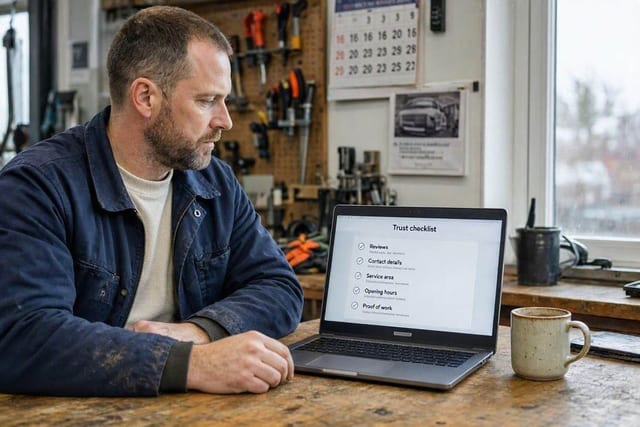
The trust signals every Tees Valley small business website should show in 2026
A practical checklist of the trust signals your small business website should show clearly, and why each one matters to cautious local customers.
Read next
Why customer psychology matters more than prettier web design
Most customers aren't looking for a prettier website. They're trying to clear enough doubt to feel confident getting in touch.
Read next