Fake reviews, real damage
Fake reviews damage customer trust and distort competition for honest businesses. Here's what the evidence says and what you can do about it.
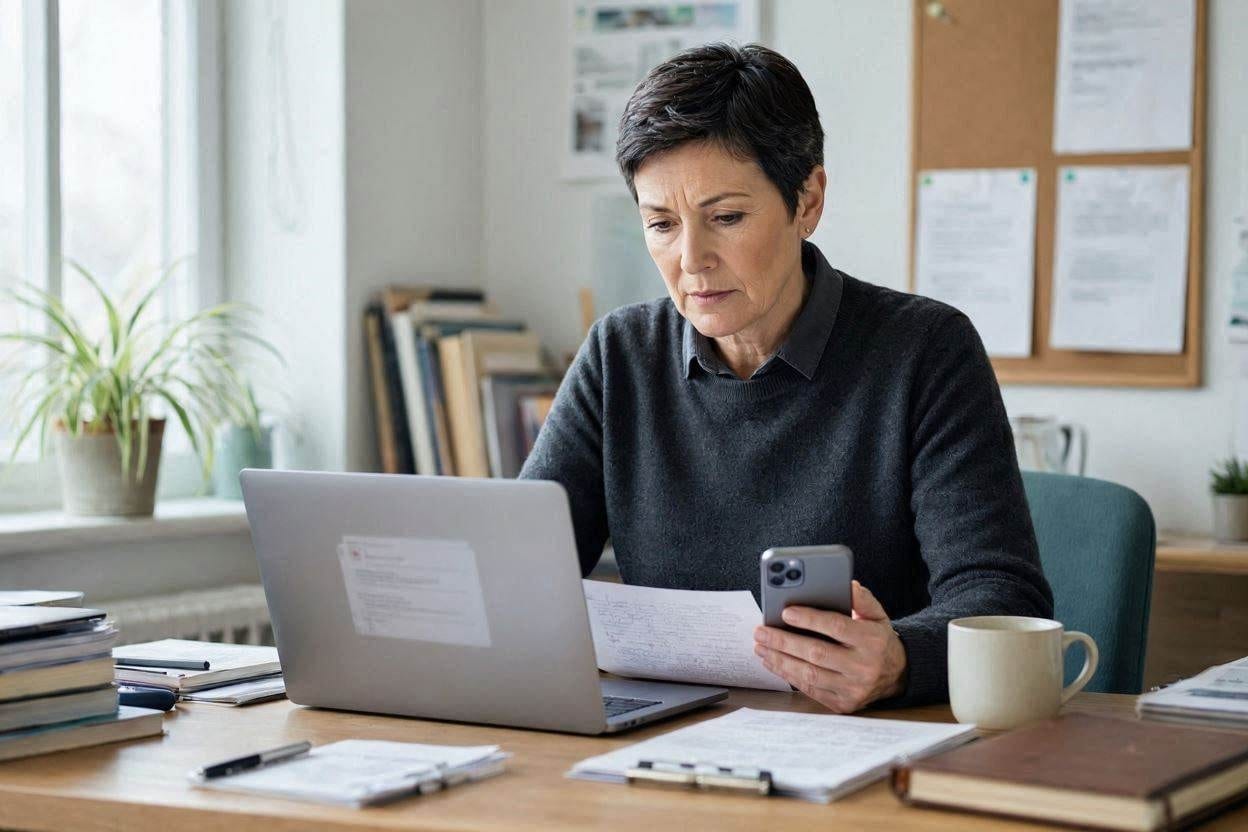
If you run an honest local business, you already know reviews matter. You've probably seen competitors with suspiciously perfect profiles, pages full of five-star reviews that all landed in the same week, or glowing testimonials that read like they were written by the same person.
It's annoying. It's also more than annoying. Fake reviews are now a live enforcement issue in the UK. They distort which businesses customers choose, and they make it harder for genuine firms to compete on merit. This post looks at what's actually happening, why it matters for local businesses in Tees Valley, and what honest businesses can do to make their own reviews work harder.
The CMA is taking this seriously
The Competition and Markets Authority has made fake reviews a direct enforcement priority. In March 2026, the CMA announced investigations into five businesses over fake and misleading review practices, as part of its broader work under the Digital Markets, Competition and Consumers Act. This has moved past vague policy talk into active enforcement.
The CMA estimates that online reviews may influence up to £23 billion of UK consumer spending annually. When reviews are faked, manipulated, or selectively hidden, that influence gets redirected. Customers decide based on false information, and firms playing fair lose out.
For local businesses this lands close to home. If a competitor in your area is buying reviews, pressuring customers for five stars, or hiding negative feedback, they're getting an artificial advantage. The customers they pull in through those misleading reviews might otherwise have found you.
Why customers rely on reviews so heavily
Fake reviews do so much damage because real reviews carry a lot of weight when people choose a local business.
BrightLocal's 2026 survey found that 85% of consumers are more likely to use a business after positive reviews, 77% are deterred by negative ones, and 54% visit the business website after reading positive reviews.
On local searches especially, reviews often act as the first trust filter. Someone looking for a painter in Stockton or a driving instructor in Darlington will scan star ratings and review text before they click a website or make a call. A stack of genuine, detailed reviews builds real confidence. A stack of fake ones builds false confidence, and the honest business loses the comparison.
What customers are noticing
Customers aren't as easily fooled as some businesses assume. Anecdotal evidence from UK-focused forums and discussion threads shows people regularly call out reviews that feel fake. They notice when everything appeared in the same period, when the language is oddly similar across multiple reviews, when there's no detail about the actual work, or when a business pressures them for a review in an uncomfortable way.
Ofcom's research found that 57% of adults aware of AI said they would trust AI-generated content less than human-written material. That wider suspicion about authenticity extends to reviews. People are more sceptical than they used to be, and that scepticism means businesses with obviously fake or thin reviews can end up worse off than firms with fewer but clearly genuine ones.
BrightLocal's trust research found that 63% of consumers would lose trust when they saw mostly negative written reviews. The flip side holds too: reviews that feel manufactured or pressured can undermine trust just as effectively as bad ones. Customers who suspect they're being misled tend to look elsewhere.
How this distorts local competition
Fake reviews don't only hit individual businesses. They distort the market every local firm operates in.
In Tees Valley, where 88.1% of businesses are micro-firms and most rely on local enquiries, reviews are one of the main ways customers tell options apart. When some businesses inflate their profiles artificially, honest firms get pushed down the comparison list. The customer sees five stars next to four and a half, and genuine reviews lose out to manufactured ones.
This matters even more as AI-generated search summaries become common. Ofcom's research shows 75% of online adults read AI-generated summaries at least sometimes. If AI systems pull from review data to make recommendations, businesses with artificially inflated profiles may get recommended more often whether they deserve it or not. The accuracy of the underlying data becomes the whole game.
What honest businesses can do
If you're doing good work and earning genuine satisfaction from customers, the worst move is to sit still. Not because you need to fight fire with fire, but because genuine reviews need to be visible, recent, and responded to if they're going to do their job.
Ask for reviews, but do it properly. There's nothing wrong with asking a happy customer to leave one. What matters is how you ask. A simple, unpressured request after a job is fine. Offering incentives, demanding five stars, or making people feel uncomfortable is not, and it's the kind of behaviour the CMA is specifically concerned about.
Reply to your reviews. Google's own local-ranking guidance highlights review responses as something that helps businesses stand out in local search. Even a brief thank you shows the business is active and engaged. It also shows potential customers that real people are behind it.
Don't ignore negative reviews. A calm, professional reply to a bad review often does more for your reputation than a hundred five-star ratings. It shows potential customers you handle problems with integrity, and that matters more than a perfect score.
Let the detail speak. Genuine reviews tend to mention specific work, specific situations, or specific parts of the service. That kind of detail is hard to fake and easy for customers to spot. If your reviews naturally contain that specificity, they build more trust than a row of five-star ratings with no substance.
Keep them coming. Review recency matters. Twenty reviews from three years ago look different from ten reviews in the last six months. If you've had a quiet patch, make a habit of asking satisfied customers after each job.
The long view
The CMA's enforcement activity is a clear signal: the rules are getting tighter. Businesses that rely on fake or manipulated reviews are taking a growing risk, legally and commercially. As AI systems play a bigger part in local discovery and customers grow more sceptical, the value of obviously genuine, recent, detailed reviews will keep rising.
For honest local businesses, the message is straightforward. You don't need to play games. You don't need to buy reviews or pressure customers. Do good work, ask people to talk about it, respond when they do, and make sure the trust your reviews create is backed by a clear, accurate online presence.
The firms that win on reviews over time aren't the ones with the most stars. They're the ones where the reviews feel real, the responses feel human, and the website backs up the story. That's harder to fake, which is exactly the point. What happens after a customer reads those reviews is the next part of the journey.
Related posts
Why Middlesbrough firms cannot afford weak trust signals
In Middlesbrough every local enquiry counts. Weak trust signals online cost businesses customers they can't afford to lose.
Read next
Why your website loses leads after good reviews
Good reviews get people interested. If your website doesn't keep that trust going, they leave before they ever contact you.
Read next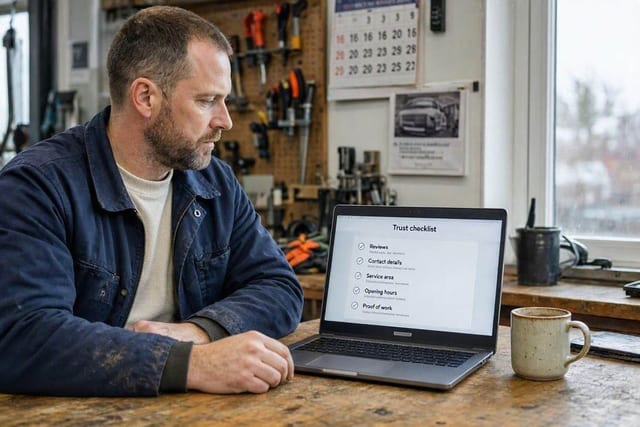
The trust signals every Tees Valley small business website should show in 2026
A practical checklist of the trust signals your small business website should show clearly, and why each one matters to cautious local customers.
Read next