What trades customers hate online
Trades customers want reliability, honesty and fast answers. Here's what puts them off online and how a decent website can fix it.
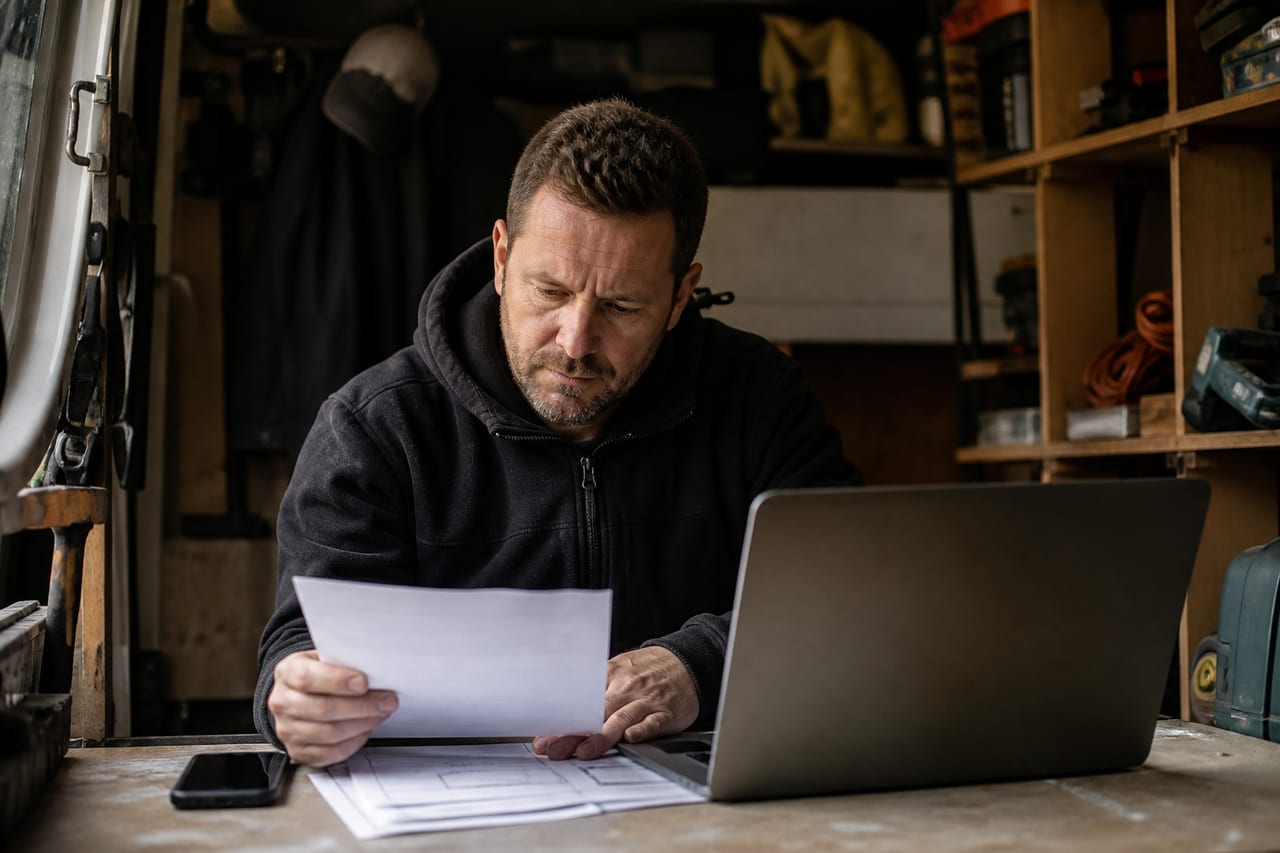
If you're a tradesperson or run a home service business, you probably get most of your work through word of mouth, repeat customers, and maybe some Facebook activity. That works, up to a point. But if you've ever wondered why some potential customers seem interested and then go quiet, the answer might be in what they found (or didn't find) when they looked you up online.
The frustrations that come up again and again when customers talk about hiring trades aren't subtle. They're practical, and most of them are things a decent online presence can address directly.
The recurring complaints
The evidence on what frustrates customers of trades and home services comes from several directions. Consumer research, UK regulator evidence, and anecdotal discussions on forums and Reddit threads about hiring UK trades all point to a consistent set of frustrations. These are anecdotal patterns rather than survey data in most cases, but they align closely with what official sources like the CMA and Ofcom have found about trust and online decision-making.
No-shows and unreliability. This is consistently the biggest frustration. Customers describe booking work, being given a date, and then hearing nothing. No call, no explanation, no update. The person just doesn't turn up. Obviously a website can't fix whether someone actually shows up, but it can show evidence that the business takes reliability seriously: clear communication, response commitments, reviews that mention punctuality and follow-through.
Slow or no replies. Someone fills in a contact form or sends a message, and they wait. And wait. For a customer who's comparing three or four businesses, the first one to respond properly usually gets the job. If your website makes it hard to get in touch, or if your contact form disappears into an inbox you don't check, you're losing to whoever picks up the phone faster.
Unclear pricing. Customers don't always expect a fixed price upfront, but they want some indication of what to expect. "It depends" with no further context creates anxiety. A website that gives ballpark ranges, explains what affects the price, or at least describes the quoting process helps customers feel more comfortable. You don't have to publish a price list, but giving people enough to know they're in the right ballpark matters.
Lack of proof. When someone is letting a stranger into their home to do work, they want reassurance. Photos of previous jobs, reviews from real customers, trade body memberships, insurance details. The businesses that show these things get more enquiries than the ones that don't. It's that straightforward.
Vague service areas. "Covering the North East" means different things to different people. Does that include Hartlepool? Do you go as far as Darlington? Will you travel to rural areas? Being specific about where you work saves you time and gives customers confidence that you're actually local to them.
Pressure for reviews. This one is interesting because it comes from the customer side. People notice when a business aggressively pushes for five-star reviews, and it makes them sceptical. The CMA has made fake and pressured review practices an enforcement priority, and customers are increasingly aware that not all reviews are genuine. Businesses that earn reviews naturally and respond to them calmly tend to build more trust than ones with suspiciously perfect profiles.
Why this matters for trades specifically
Hartlepool's 2026 JSNA data shows that manufacturing, construction, retail, and public administration are among the largest employment sectors locally, with construction and manufacturing over-indexing against the national structure. Across Tees Valley, trades, home services, and operational service businesses represent a significant part of the local economy.
These businesses typically compete on trust and word of mouth rather than brand or advertising. That means online trust signals do a lot of heavy lifting. When a customer is choosing between three plumbers or two electricians, the one whose online presence answers their questions and reduces their concerns will usually win, even if the others are equally skilled.
What a decent website does for a trades business
A trades website doesn't need to be fancy. The best ones are simple, clear, and focused on the things customers actually want to know. Here's what that looks like in practice.
A clear list of services. Not "building services" or "all aspects of plumbing." Specific services, described plainly. "Bathroom installations, boiler repairs, central heating systems, and emergency call-outs across Stockton and Middlesbrough." Customers can immediately see whether you do what they need.
Your service area, named. List the towns and areas you cover. This helps customers and it helps Google understand where your business operates.
Photos of real work. Before-and-after shots are ideal for trades. Kitchen fitting, bathroom tiling, garden landscaping, roofing work. Photos taken on a phone are fine. What matters is that they're genuine and show the quality of your work.
Reviews or testimonials. Even a handful of genuine reviews, ideally mentioning the type of work and the area, make a real difference. If you've got Google reviews, show some of them on your website too. BrightLocal found that over half of consumers visit the business website after reading positive reviews, so your site needs to continue the trust those reviews started.
Easy contact. Phone number tappable on mobile, visible on every page. A short contact form if you use one. A clear statement about what happens next: "We'll call you back within 24 hours" or "Send us a message and we'll get back to you today." Setting that expectation reduces the anxiety of reaching out to a stranger.
Some indication of how pricing works. Even a sentence like "We offer free, no-obligation quotes for all domestic work" is better than nothing. It tells the customer what the next step involves and reduces the fear that they're committing to something by getting in touch.
The competition is closer than you think
Ofcom data shows that 77% of UK adults' online time is on smartphones, and Google Maps is used by 77% of adult smartphone users monthly. When someone searches "electrician near me" on their phone, they're comparing the businesses that show up, and they're making that comparison based on what they can see right there: Google listings, reviews, and websites.
The trades businesses that do well from online searches aren't necessarily the best at their trade. They're the ones whose online presence answers the customer's questions and removes their concerns fastest. That's not unfair, it's just how the process works now.
If you're good at your trade but your online presence isn't reflecting that, the gap is costing you work. And closing that gap doesn't usually require much. It requires someone to sit down, look at the online presence through a customer's eyes, and fix the things that are creating unnecessary doubt. Looking clearly legitimate online is the practical checklist behind that work.
Related posts

What Tees Valley micro-businesses should fix before buying more marketing
Before spending on more marketing, most Tees Valley micro-businesses should fix the digital basics that are already blocking enquiries.
Read next
Why Small Businesses in the North East Don't Have Websites - And Why It's Costing Everyone
Rogue traders thrive on social media. Lloyds Bank data shows 68% of fraud starts on Meta. Yet official UK guidance still treats Facebook as a valid substitute for a business website. Here's the full picture.
Read next
The Implementation Gap Facing Small Businesses in Tees Valley
Some of the best tradespeople and local businesses in Tees Valley are still surprisingly hard to find online.
Read nextTell me what is happening
Not sure what people find, trust, or choose online? Tell me what is happening in your business and I will point you towards the most useful next step.
Tell me what is happening