How Redcar and Stockton businesses can turn stronger local demand into more enquiries
Redcar and Stockton have stronger local employment than some neighbours. Here's how businesses there can turn that demand into more actual enquiries.
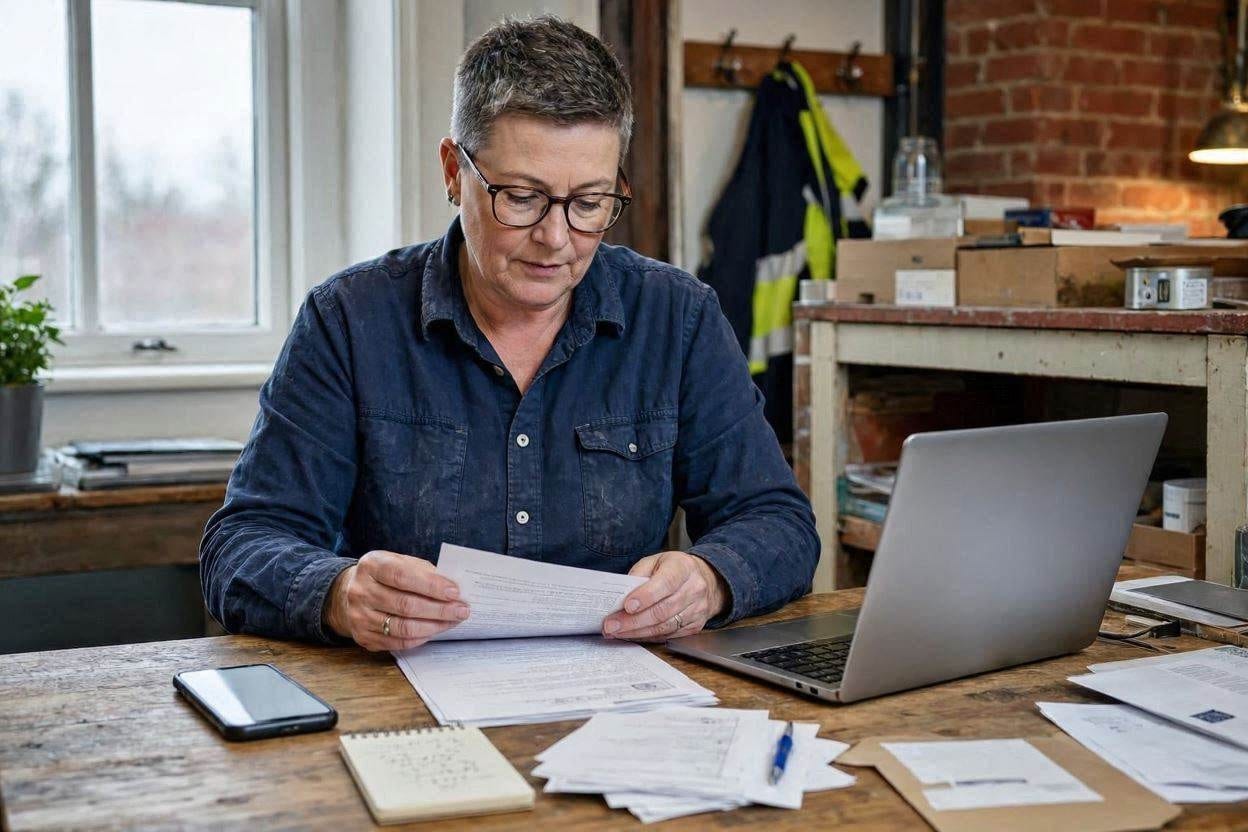
Redcar and Cleveland, and Stockton-on-Tees, sit in a different position to some of their Tees Valley neighbours. The employment picture is relatively stronger, economic inactivity is lower, and the local customer base looks more active. That's not a reason for complacency, but it is an opportunity that many local businesses aren't making the most of.
If there's more demand around you, the question isn't just "how do I find more customers?" It's "how do I make sure the customers who are already looking can find me, trust me, and actually get in touch?"
The local context
ONS data for the year ending December 2023 shows Redcar and Cleveland with a 74.3% employment rate and 23.1% economic inactivity. Stockton-on-Tees is similar, at 74.1% employment and 22.3% inactivity. Both are materially stronger than Middlesbrough's 64.4% employment and 29.2% inactivity, and both are closer to the Great Britain average than some other parts of Tees Valley.
That doesn't mean everything is fine. These are still areas with real economic pressures and plenty of competition between small businesses. But it does mean there's a relatively larger pool of people who are working, spending, and actively searching for local services. If you're a tradesperson, a professional service provider, or any kind of local business in these boroughs, there are customers looking for what you offer. The question is whether they can find you when they look.
The gap between demand and enquiries
Across Tees Valley, 88.1% of the 17,705 enterprises recorded by Nomis in 2025 are micro-businesses with fewer than ten employees. Many of them are owner-managed, which means the business owner is doing the work, handling the customers, and somehow also responsible for making sure the business shows up online.
The result is a pattern I keep seeing: businesses that do great work but have an online presence that doesn't reflect it. A Google Business Profile that was set up once and never updated. A website that was built a few years ago and hasn't been touched since. Contact details that don't match across different platforms. Services that aren't clearly explained anywhere a customer would actually look.
This is the gap between demand and enquiries. The customers exist. They're searching. But when they find a business that looks incomplete, inconsistent, or unclear, they move on to the next option. In boroughs like Redcar and Stockton, where there's genuinely more local activity to tap into, that's a missed opportunity.
What customers are doing before they get in touch
Ofcom data shows that smartphones account for 77% of UK adults' online time, and Google Maps is used by 77% of adult smartphone users in a typical month. When someone in Redcar needs a roofer or someone in Stockton is looking for a bookkeeper, the search starts on a phone and usually involves Google Search, Google Maps, and reviews.
Google's own local-ranking guidance says that complete and accurate business information, including address, phone number, categories, opening hours, and photos, improves local visibility. That means the businesses that show up most prominently in local results tend to be the ones with the most complete and accurate profiles. If your competitor down the road has a fully filled-out Google Business Profile with recent photos and replied-to reviews, and yours is sparse or outdated, they're more likely to appear first.
BrightLocal's research found that 85% of consumers consider contact details and opening hours important when researching local businesses. Google's own UK local search study found the same pattern: hours and contact details were among the most commonly searched local information, and local searches often led to quick follow-up action.
Aligning your website with your Google presence
This is the single most practical thing most local businesses in Redcar and Stockton could do to convert more of the demand that already exists around them.
Your Google Business Profile and your website should tell the same story. Same phone number. Same hours. Same services. Same address or service area. If a customer finds you on Google Maps and then clicks through to your website, everything should match and reinforce the impression that this is a well-run, trustworthy business.
When things don't match, it creates doubt. And the evidence on customer behaviour is clear on this point: doubt at the decision stage is usually enough to lose the enquiry. The customer doesn't complain or tell you what happened. They just try someone else.
Practical steps that don't need a big budget
None of this requires an expensive marketing campaign or a new website build. For most owner-managed businesses, the improvements that make the biggest difference are about accuracy and completeness, not design or complexity.
Fill out your Google Business Profile properly. Every section: categories, services, hours, phone number, photos, description. If you set it up years ago and haven't looked since, it's almost certainly missing things that would help you appear in more local searches.
Update your opening hours everywhere. Google, your website, Facebook, any directories. Check them all and make them consistent. It takes thirty minutes and removes one of the most common reasons customers give up on a business.
Write clear service descriptions. On your website and in your Google profile, be specific about what you do. "Building services" is vague. "Kitchen extensions, loft conversions, and garage builds across Stockton and Redcar" is something a customer can act on.
Show recent work and reviews. If you've done good work recently, put photos on your Google profile and your website. Reply to reviews, even just a thank you. Review recency and responsiveness are both trust signals that customers notice.
Make your phone number tappable. This is a small thing that matters a lot on mobile. If someone finds your number on your website, they should be able to tap it and call you immediately. If they have to memorise it and switch apps, some of them won't bother.
The opportunity is already there
The difference between Redcar and Stockton's position and some other parts of Tees Valley is that the local demand is relatively stronger. There are more people in work, more people spending, and more people searching for local services. That's an advantage, but only if your business is set up to be found when they look.
Most of the businesses losing enquiries in these boroughs aren't losing them because of bad marketing or weak products. They're losing them because the online basics aren't quite right, and a competitor who has their information in order is picking up the enquiries instead.
The demand is already there. The question is whether your online presence is set up to catch it. For most businesses, the answer is closer than they think, usually a few hours of practical work rather than a new marketing strategy. The Get Found overview explains the checks that separate a visibility problem from the next stage of the customer journey, while Get Chosen looks at what helps an interested customer take the next step.
Related posts

The Implementation Gap Facing Small Businesses in Tees Valley
Some of the best tradespeople and local businesses in Tees Valley are still surprisingly hard to find online.
Read next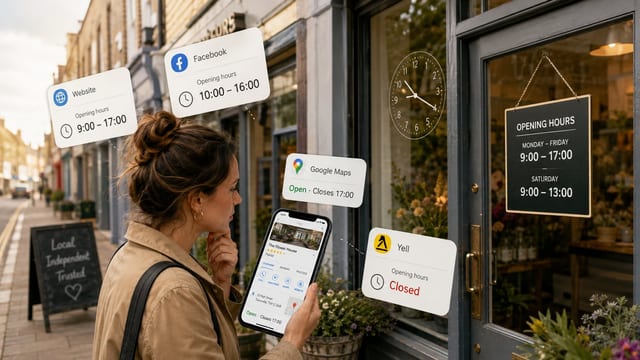
Why accurate opening hours still win local customers
Wrong opening hours cost local businesses real customers. Here is why getting them right on Google, your website and directories still matters.
Read next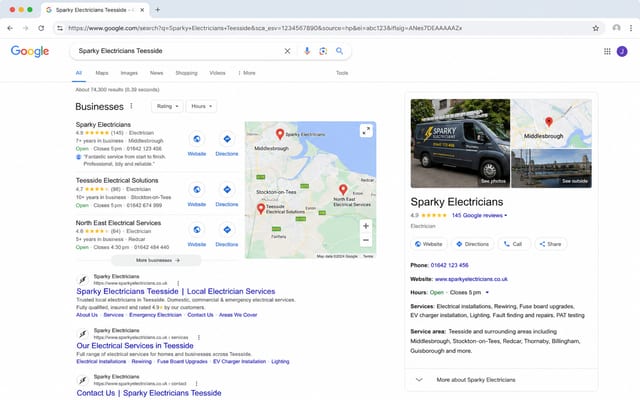
Your Google Business Profile: What It Is, How to Set It Up, and How to Keep It Working
A plain-English guide to claiming, verifying and maintaining a Google Business Profile, with current advice on local visibility, reviews and outside help.
Read next