Do I Need a Website If My Business Already Has a Facebook Page?
Facebook is useful for local businesses, but is it enough on its own? When a small business still needs a website, and what a simple site can add.
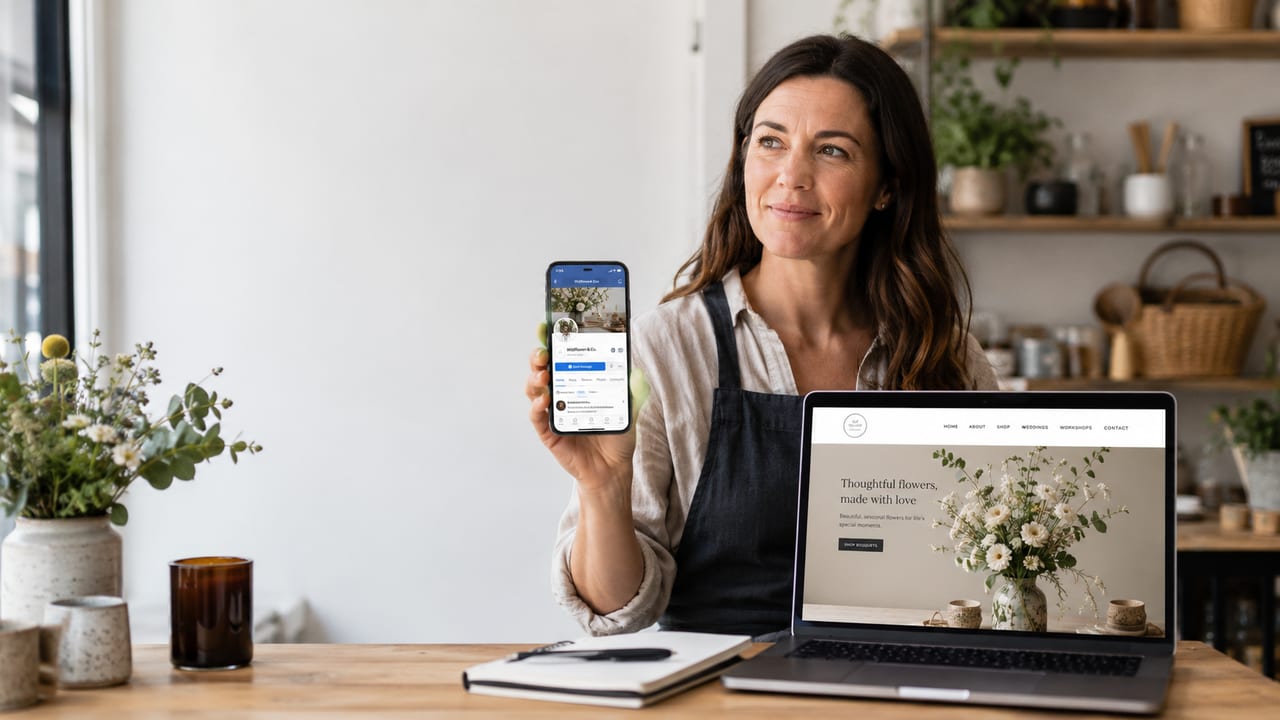
For a lot of small businesses, Facebook feels like enough.
You can post updates, show recent work, collect recommendations and answer messages without paying for a website. If you are busy through word of mouth, it can be tempting to think there is no real need for anything else.
And to be fair, Facebook can be genuinely useful. For many local businesses, it is where customers first see your work, ask quick questions, or recommend you to someone else.
But Facebook also has limits.
Not every customer uses it. Posts disappear quickly. Your business information can be hard to find. And when someone searches on Google, your Facebook page may not give them enough confidence to get in touch.
The useful question is whether Facebook alone covers what new customers need before they contact you.
Why Facebook feels like enough
Facebook is popular with small businesses because it is familiar and easy to use. You do not need technical knowledge, hosting, design work or much setup. You can create a page, add your contact details, upload photos and start posting.
For tradespeople and local service businesses, that can feel like a good fit. A decorator can share before-and-after photos. A gardener can post recent work. A cafe can update people about opening times or specials. A joiner, roofer or electrician can show examples of completed jobs.
That kind of activity matters. It shows the business is real and approachable, and that someone is still doing the work.
Facebook is also useful for recommendations. If someone asks in a local group for a reliable tradesperson, people often tag a business page or share a name. That can lead to real enquiries.
Facebook is not pointless. For many small businesses, it is a useful part of being visible online.
What Facebook is good for
Facebook works well for quick, social updates. It is good for staying in front of people who already know you, or people who have found you through friends, family or local groups.
It can help with:
- Sharing photos of recent work
- Posting short updates
- Collecting reviews and recommendations
- Answering quick messages
- Showing that your business is active
- Reaching people in local groups
- Building familiarity with existing customers
For some businesses, especially those with a loyal local following, Facebook can bring in a steady amount of work.
But being active on Facebook is not the same as having a clear online presence.
Where Facebook starts to fall short
The main problem with relying only on Facebook is that you do not fully control it.
Your page sits inside someone else's platform. Facebook decides how posts appear, who sees them, what layout your page uses and how easy it is for people to find certain information.
That can create a few problems.
First, posts move quickly. Something useful you posted last month may now be buried under newer updates. If a customer wants to know what services you offer, where you work, or how to contact you, they may have to scroll around to find the answer.
Second, not everyone wants to use Facebook. Some people do not have an account. Some rarely log in. Others may simply prefer to check a proper website before they contact a business.
Third, Facebook pages can feel limited. They all look broadly similar, which makes it harder to present your business in a clear, professional way. You can add photos, posts and basic details, but it is not the same as having a structured website built around your services.
And finally, Facebook is not always enough for Google. If someone searches for a service in their area, Google needs clear information about what you do, where you do it, and why your business is relevant. A Facebook page can help, but a website usually gives Google and customers much clearer signals.
Why customers still look for a website
When people are thinking about contacting a local business, they often want reassurance before they make the first move.
They may want to know:
- Do you offer the service they need?
- Do you cover their area?
- Do you look professional and trustworthy?
- Can they see examples of your work?
- Are there reviews or testimonials?
- Is there a clear phone number, email address or enquiry form?
- Do you seem like a real local business?
A website gives people one clear place to check all of that.
That matters because many customers will not contact the first business they see. They compare. They click around. They look for signs that a business is genuine, reliable and easy to deal with.
If your Facebook page has a few photos but no clear explanation of your services, no service area, no proper contact page and no structured information, some people will move on.
It does not always mean they disliked your business. They may simply not have found enough information to feel confident.
How a website helps with Google visibility
A website can also help your business become easier to find on Google.
Think about how people search when they need something locally. They might type phrases like:
- decorator in Middlesbrough
- garden maintenance in Redcar
- joiner near me
- electrician in Teesside
- small business web design in Middlesbrough
Those searches usually come from people who already have a need. They are not just scrolling. They are looking for someone who can help.
A website gives you space to explain your services properly. You can have a page that says what you do, where you work, who you help and how people can contact you. That gives Google more useful information than a handful of social posts.
It also gives you somewhere to link from your Google Business Profile, Facebook page, email signature, leaflets, business cards and directory listings.
In short, Facebook helps people see that you are active. A website helps people understand what you do and whether you are right for them.
What a simple small business website should include
A small business website does not need to be huge. In many cases, a simple one-page website is enough to start.
The most important thing is that it answers the questions customers already have.
A useful local business website should usually include:
- A clear explanation of what you do
- The areas you cover
- Your main services
- Photos or examples of your work
- Reviews, testimonials or trust signals
- Easy contact details
- A clear call to action
- Opening hours, if relevant
- Answers to common questions
For example, a decorator might show interior and exterior work, list the towns they cover and explain whether they take on domestic or commercial jobs.
A gardener might explain regular maintenance, one-off tidy-ups, hedge cutting, lawn care and seasonal work.
A cafe might include opening hours, menus, location, photos, accessibility information and links to social updates.
A tradesperson might include qualifications, insurance details, service areas, examples of previous jobs and a clear way to request a quote.
None of this needs to be complicated. It just needs to be clear.
When Facebook alone might be enough
There are situations where a website may not be urgent.
If you are fully booked through referrals, have no interest in growing, and your customers already know how to contact you, Facebook alone may be enough for now.
The same may be true if your business is very small, part-time, or mostly based on existing relationships.
A website is not about having one for the sake of it. It should have a job to do.
That job might be helping you appear on Google, giving customers a better first impression, explaining your services more clearly, or making it easier for people to contact you.
If you do not need any of those things yet, you may not need to rush.
The honest answer: Facebook and a website work best together
For most small businesses, Facebook and a website work better side by side than either one alone.
Facebook is useful for regular updates, community visibility and showing recent activity. Your website is useful as a more permanent, reliable home for your business online.
They do different jobs.
Facebook helps people see what is happening now. Your website helps people understand who you are, what you offer and how to take the next step.
A simple website also gives your business something more stable. You are not depending entirely on a social media platform, and you are giving customers a clearer place to check you out.
For many local businesses, that can tip someone from "I've seen their page" to "They look like the right business to contact."
What to do next
If you already have a Facebook page, you do not need to throw it away. Keep using it. Keep posting useful updates. Keep sharing photos and staying visible.
But it is worth asking whether your Facebook page answers the questions a new customer would have.
Can they quickly see what you do? Can they tell where you are based? Can they find your services, examples, reviews and contact details without scrolling through months of posts?
If not, a simple website could give your business a clearer and more trustworthy online presence.
It does not have to be large, expensive or complicated. For many small businesses, the right starting point is just a clean, practical website that explains what you do and makes it easy for people to get in touch. What customers are trying to work out when they land on a site is a useful way to judge whether Facebook alone is covering those needs.
If you are unsure whether you need a website, better Google visibility, or just a clearer online setup, Local Roots Digital can help you work out what would actually make sense for your business.
Related posts
What one in five smartphone-only users means for local websites
One in five UK adults only go online on their phone. If your website is awkward on a small screen, a large share of your customers will struggle to use it.
Read next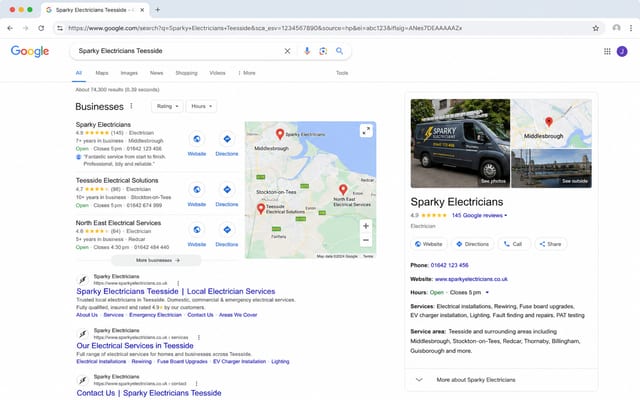
Your Google Business Profile: What It Is, How to Set It Up, and How to Keep It Working
A plain-English guide to claiming, verifying and maintaining a Google Business Profile, with current advice on local visibility, reviews and outside help.
Read nextCompare the cost of a website with smaller fixes
See the current starting prices for assessments, focused improvements and website projects before deciding what fits.
View pricing