Why local agencies are talking about GEO and what actually matters
GEO and AEO are buzzy terms, but for small businesses, the real priorities are the same ones that already help with Google. Here's what to focus on.
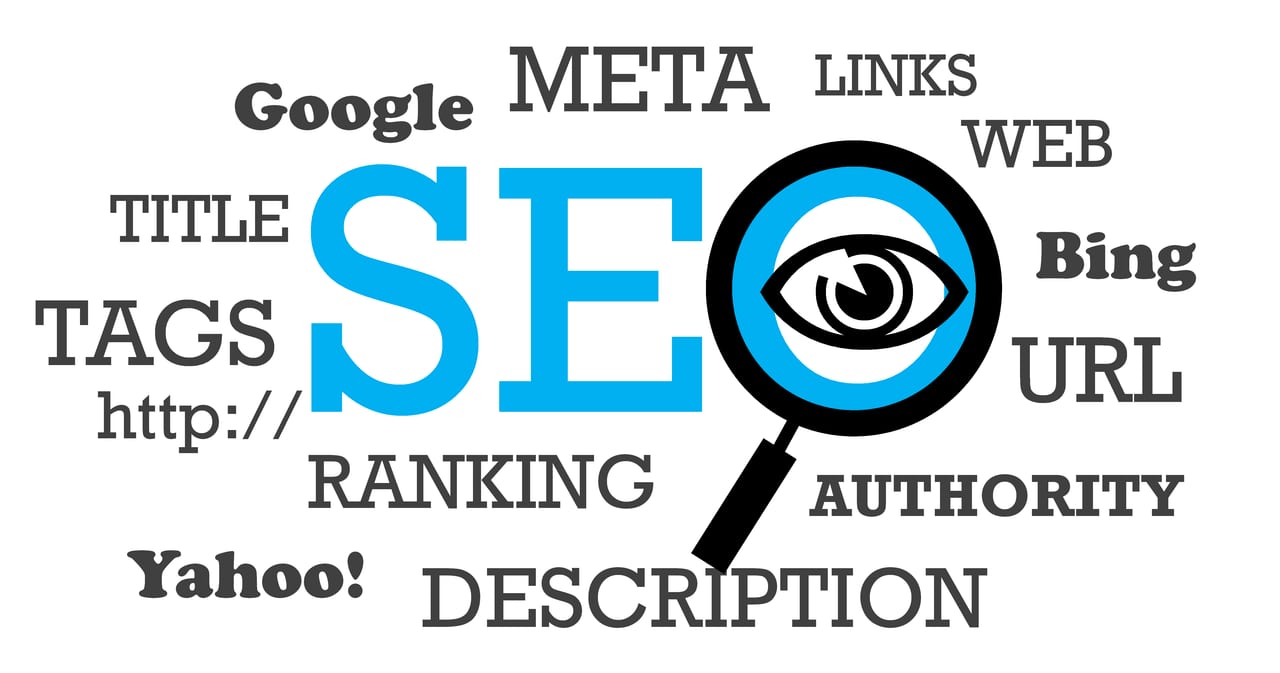
You might have noticed that digital agencies have started using some new terms recently. GEO (generative engine optimisation), AEO (answer engine optimisation), "AI-first visibility", "zero-click search strategy." If these sound confusing, that's partly the point. New language creates urgency, and urgency creates business for the agencies selling it.
That doesn't mean it's all nonsense. Something real is changing in how people find information online, and it does have practical consequences for local businesses. But the gap between the marketing language and what actually matters is wide, and this post is about closing it.
What GEO and AEO actually refer to
GEO, generative engine optimisation, is a term that comes from academic research. A 2023 paper by Aggarwal and others explored how content could be optimised to appear more prominently in AI-generated search results. Their experiments found visibility improvements of up to 40% in a benchmarked research environment, though that was a controlled study, not a live Google Search test.
AEO, answer engine optimisation, is a broader term used by practitioners to describe the process of making your content more likely to be selected as a direct answer by AI systems like ChatGPT, Google's AI Overviews, Perplexity, or Gemini.
Both terms describe variations on the same idea: making sure your business and content show up when AI systems generate answers rather than just listing links. The distinction between GEO and AEO is blurry even among practitioners, and for a local business owner, the difference doesn't really matter. What matters is what you actually need to do about it.
What Google says (and it's surprisingly clear)
Google's Search Central documentation for 2026 makes a few things very clear. AI Overviews and AI Mode in Google Search are rooted in the same core ranking and quality systems that power conventional search. They use the same search index, and they show clickable links to the source pages they draw from.
Google also says, directly, that there are no extra requirements to appear in AI features. No special files, no unusual formatting, and no "AEO hacks." Their guidance specifically warns against over-focusing on supposed shortcuts. The businesses that appear in AI search results are the ones with useful content, clear technical structure, accurate business data, and pages that Google can crawl and index.
In June 2026, Google introduced Search Console reporting for AI-driven search appearances. That's a practical step that turns AI visibility into something you can actually measure, rather than something you have to take an agency's word for.
What agencies are actually selling
Here's the part that's worth understanding. Agency directories like DesignRush and Clutch show the recurring local SEO service bundle: Google Business Profile optimisation, citation management, technical SEO, content, website tidy-up, schema markup, and reporting. That bundle hasn't fundamentally changed. What has changed is the framing.
Agencies are increasingly marketing those same services under AI-era labels. "AI search audit", "GEO strategy", "answer engine readiness." In many cases, the work underneath is still Google Business Profile management, website content improvement, and technical housekeeping. That's not automatically dishonest, those things do help with AI visibility, but it can be misleading if the customer thinks they're paying for something radically new.
Clutch listed 5,701 SEO companies in the UK in June 2026. The market is crowded, and differentiation through new terminology is one way agencies try to stand out. For a business owner, the useful filter is: can the agency explain clearly what they'll do, why it matters, and how they'll measure whether it worked?
What the emerging evidence actually shows
The part that is genuinely new and worth paying attention to is how AI systems handle local business recommendations. Emerging industry research, reported by Search Engine Land, found that AI assistants recommended only 1% to 11% of the locations tested. Business information accuracy on ChatGPT and Perplexity was around 68%, compared to 100% on Google's Gemini, which draws from Google Maps data.
Those numbers come from a single study and the methodology is still developing, so they shouldn't be treated as settled benchmarks. But the direction is clear: AI assistants are more selective than conventional search, and they're more likely to get your details wrong, especially if your information is inconsistent across platforms. Businesses with clean, consistent data are better positioned. Businesses with messy or conflicting records are more likely to drop out of the answer.
Ofcom's 2026 research found that 75% of online adults read AI-generated search summaries at least sometimes, and 54% of UK adults use AI tools. This is mainstream behaviour now, not a fringe concern. But the exact conversion impact of AI summaries on local business enquiries isn't proven yet in UK settings. That's an honest gap in the evidence.
What a small business should actually prioritise
The practical takeaway is simpler than the terminology makes it sound.
Do the SEO basics well. Google says AI features are built on the same ranking systems as conventional search. Crawlable, indexable, useful pages with clear content and accurate business information are the foundation. This hasn't changed.
Keep your business information consistent everywhere. Same name, phone number, hours, services, and location across your Google Business Profile, your website, directories, and social profiles. This was already important for conventional local SEO, and it matters even more when AI systems are pulling from multiple sources to generate answers about your business.
Write clear, specific content. Each service should be described plainly enough that both a person and a machine can understand what it is, where it's offered, and who it's for. Generic marketing language doesn't help with AI interpretation.
Use structured data where it's relevant. LocalBusiness schema, Service schema, and Review schema help search engines and AI systems understand your pages more accurately. It's not a magic switch, but it's a useful clarity layer.
Don't buy into fear. If an agency tells you that your business will disappear from search unless you buy their AI optimisation package, ask them to show you exactly what they'll do and how they'll measure results. Google has said there are no extra requirements for AI features. The foundations are the same ones that have worked for years.
The honest summary
Something real is changing. AI-generated summaries and recommendations are becoming a normal part of how people discover local businesses, and the data suggests AI systems can be more selective and less accurate than conventional Google search. That makes clarity, consistency, and accuracy more important than before.
But for most local businesses, the response isn't a new strategy or a new type of agency service. It's doing the existing work better. The businesses that have clear websites, complete Google profiles, consistent information, and genuine reviews are already well-positioned for whatever AI search looks like as it develops. The ones that are most at risk are the ones with messy data, vague content, and outdated details, and those are the same businesses that were already struggling in conventional search.
The best filter when you're evaluating any digital service, AI-related or otherwise, is a simple question: can they explain exactly what they'll do, why it matters, and how they'll measure whether it worked? If the answer is mostly buzzwords, you have your answer.
Related posts
Local SEO is not dead, but AI has changed the hand-off
AI hasn't replaced local SEO. But it has changed how customers move from search results to your website, and what they expect to find when they get there.
Read next
Why GBP and your website must tell the same story
If your Google Business Profile says one thing and your website says another, customers notice. So do Google and AI systems.
Read next
What AI readiness actually means for a small local business
AI readiness for local businesses isn't about tricks or new technology. It's about clarity, accuracy and useful content, the same things that already help you rank.
Read next