You can already know you want one
You don't have to start by buying an assessment or pretending you're unsure. If your brief is clear enough, we can go straight to scope.
If you know roughly what you need
You do not have to pretend to be unsure. If a website is the thing you need, the useful question is what it needs to do for the business.
Start with the situation
People check that a business is real, current and easy to contact before they get in touch. If they can't find a website, they may wonder why. That doesn't mean every business needs a large site, but it does mean your online home should answer the questions a careful customer is likely to ask.
A website also gives you a place you control. Social media, directories and rented profiles can help people find you, but their rules and layouts can change whenever the platform decides. Your own site is where the clearest version of your business should live.
What matters
It needs to explain what you do, who it's for, where you work, why someone can trust you and how they should get in touch. Design matters, but those practical answers matter more.
I'm not interested in building pages for the sake of having pages. I want a new customer to have enough confidence to take the next step, without having to piece your story together from scattered profiles.
You don't have to start by buying an assessment or pretending you're unsure. If your brief is clear enough, we can go straight to scope.
Some businesses need a small, focused site. Others need more structure. The right scale depends on what your customers need to understand before they enquire.
Photos, design and layout help, but they need to support the basics: who you are, what you do, where you work and what happens next.
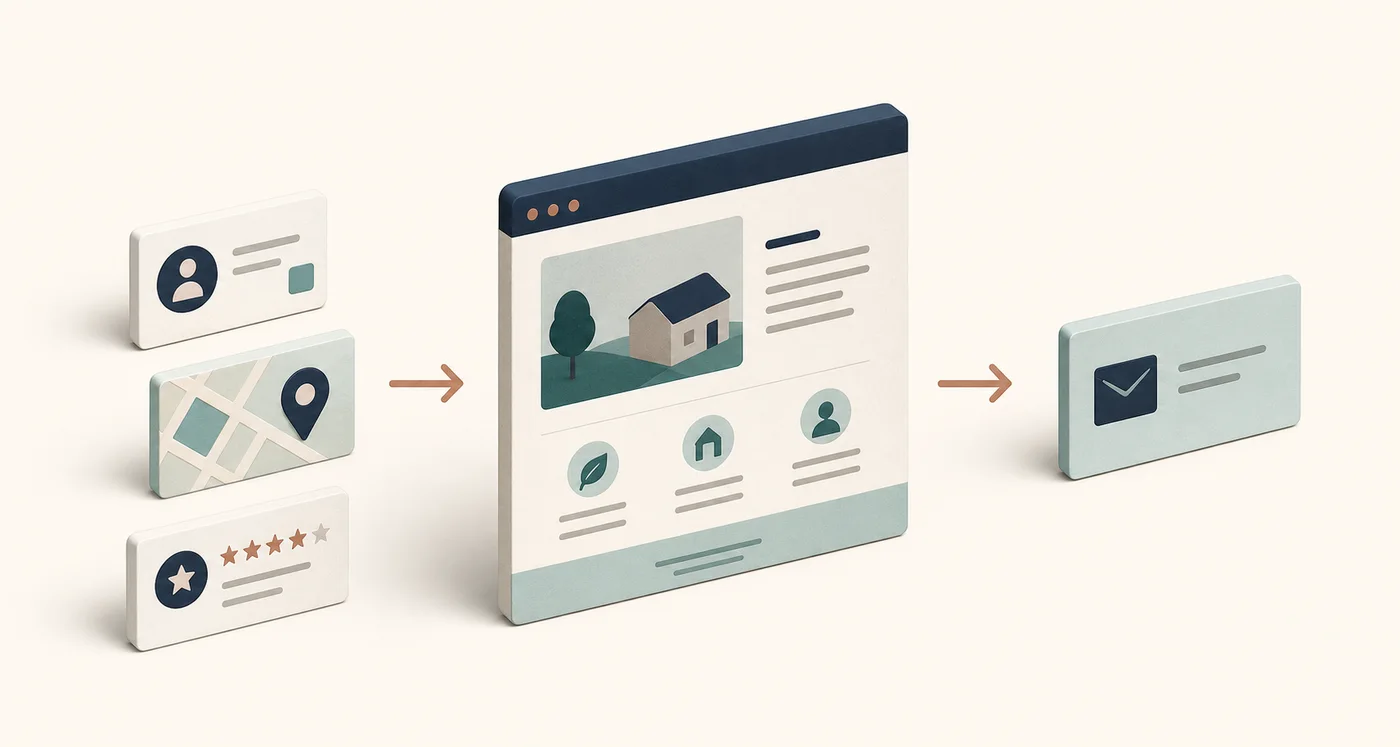
Before I build a page, I look at what a customer needs to see before they trust your business. That includes basic signs such as who's behind it, whether the offer is clear, whether pricing or next steps are visible, and whether there's enough proof to feel safe making contact.
Your website gets shaped around the customer questions that actually matter, not a layout chosen because it looks tidy in a portfolio.
Use your own words. You do not need a technical brief before asking about a website.
Your message goes directly to Michael, with this starting point attached to the enquiry.
Send the website brief