Get found, get trusted, get chosen: what the evidence supports
The three-part model is a fair shorthand. The evidence also says trust is revised after the sale, and that being chosen is not only about trust.
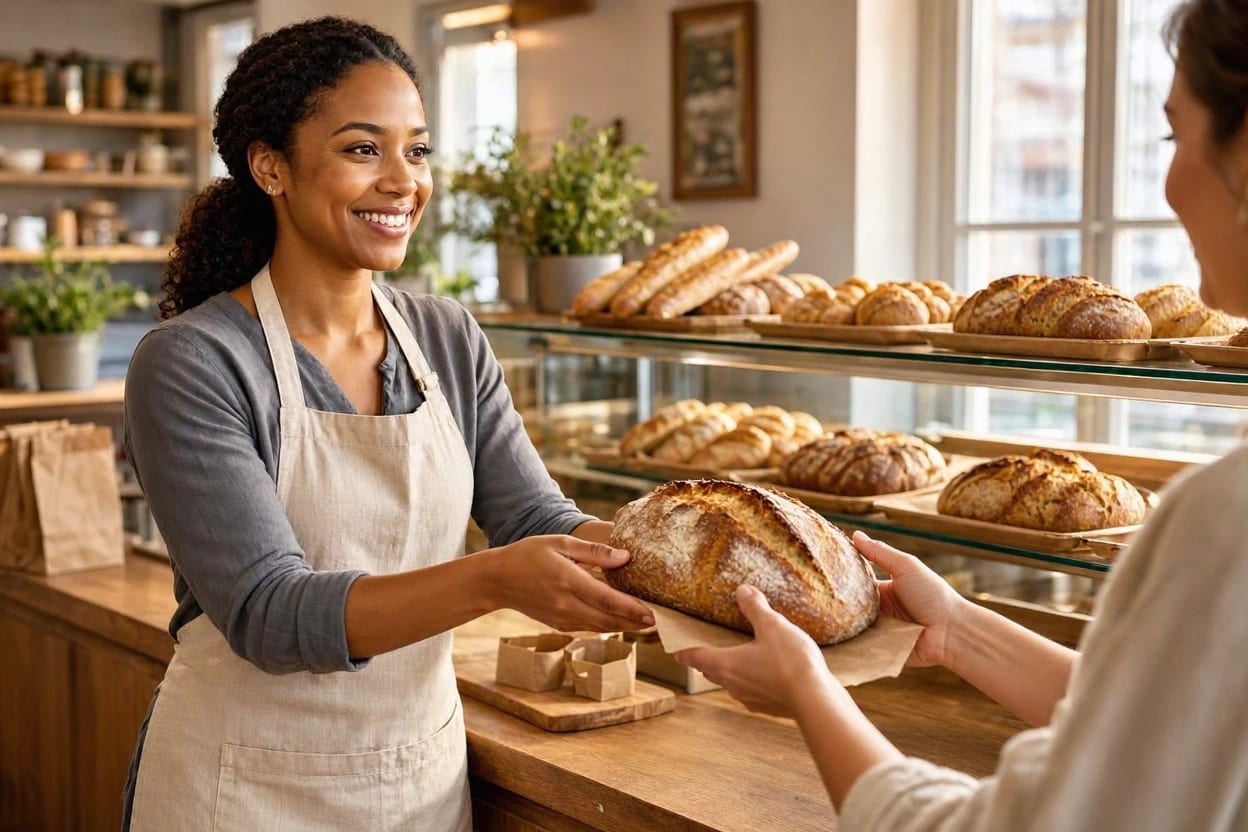
The three-part line is a fair way to organise the work, if it is not treated as a funnel that ends when the enquiry arrives. Being found is access, not trust. Being trusted at that point is provisional: credible enough for the next risk, not certified for good. Being chosen also depends on price, distance, timing and fit. What happens after someone is chosen feeds the reviews and the reputation the next customer uses.
This is a reading of the evidence already used in this series. It is not a new study. There is no single piece of UK research here that follows local firms from a search result, through an enquiry and a job, into a complaint and then into the next customer's decision. "Keep trust" is a useful name for the return loop, including recovery after a failure. It is not a claim that sound businesses never slip, and it is not a reason to add a fourth outcome page.
Get found is the chance to be assessed
What getting found means is that the business can be seen: in search, on a map, in a listing, from a recommendation. Visibility creates the opportunity for a judgement. It does not supply the judgement. A firm can rank clearly and still give a stranger nothing solid to rely on.
Get trusted is enough confidence for the next step
What getting trusted means before an enquiry is the public evidence: who is behind the business, whether the details agree, whether the work looks current. In the 1995 account from Mayer, Davis and Schoorman, trust is a willingness to be vulnerable because of beliefs about ability, benevolence and integrity. At this stage the customer is deciding whether to take a limited risk, such as making contact or booking a first visit. They are not granting permanent trust.
Familiarity helps, and it is not the same help. David Gefen's 2000 study of 217 potential online book buyers treated familiarity and trust as related but separate, and in that study both were tied to intentions to enquire or buy. The setting is old and it is about books. It does not say a known local name can skip evidence. It does say that "people have heard of you" and "this person is willing to rely on you" are different questions.
Public reputation weighs more where customers cannot lean on a famous brand. Michael Luca's Seattle restaurant study found that displayed Yelp ratings moved revenue for independent restaurants, and not in the same way for chains, using Washington State revenue data from roughly 2003 to 2009. That is restaurants in that city and those years. Why a review score and a willingness to rely on you are different keeps the percentage inside that study. The point for the model is only that being found is not the same event as being credible enough to approach.
Get chosen uses more than trust
What getting chosen means is the decision to take the next step: call, book, or ask for a price. Trust can be part of that. So can a shorter journey, a time you can actually do, a price the customer can compare, and a service that fits the job. A model that said the most trusted firm always wins would be stronger than the evidence. Nothing in these sources shows trust outranking fit and practicality in every local market.
After the sale, the promise can be checked
Before contact, the customer is reading clues. After they have instructed you, those clues meet what you do. A missed callback, a handoff that makes them retell the story, or a date that was named and then missed is no longer only a weak listing. Why making customers chase you damages trust is where the UK evidence on that friction is kept, in energy and broadband rather than in local trades. The figures stay there.
The same is true of a process that looks efficient from the inside and costly from the outside. Making it hard to leave can also put the next person off joining. The subscription polling behind that sentence, and what it does not prove, is in when business efficiency starts damaging customer trust. Where a process is automated, keeping trust includes a way to reach a person when the automation cannot finish the job. Citizens Advice argued for that in essential services in 2026. It did not publish a percentage that belongs in this article, and it did not describe a one-person firm's ordinary confirmation email.
What "keep trust" adds
The three-part line still works as a public description of the work before and at the enquiry. What it leaves quiet is the return. Customers who were chosen produce the reviews, the recommendations and the stories that the next stranger uses when deciding whether you seem credible. How small customer failures add up is that accumulation. Whether trust can be repaired after a failure is the fact that a miss is not the end of the evidence. What you do next is a new piece of it.
"Keep trust" belongs as that loop. It does not belong as a promise that the trusted firm will never be late, never miss a call, or never need to repair anything. Trust here is revised. It is not a badge that, once earned, sits still.
The model is a way to see which part of a particular firm is thin. For many local businesses that is still the evidence a stranger can check before they enquire. For others the finding, the listing and the first impression are sound, and the thin part starts once someone has said yes. How I help starts from whichever of those is actually the gap.
References and further reading
- Mayer, Davis and Schoorman (1995), An Integrative Model of Organizational Trust, Academy of Management Review. Trust as a willingness to be vulnerable, based on ability, benevolence and integrity. Not a local conversion study.
- Gefen (2000), E-commerce: the role of familiarity and trust, Omega. Familiarity and trust separated in a study of 217 potential online book buyers.
- Luca, Reviews, Reputation, and Revenue: The Case of Yelp.com, Harvard Business School Working Paper 12-016. Displayed ratings and revenue for Seattle restaurants, about 2003 to 2009. The effect was concentrated in independent restaurants, not chains.
- Citizens Advice (22 September 2026), Behind digital walls. A route to a person in essential services. No chatbot survey percentage is taken from news reports.
Related posts

Why broken promises damage trust
A delay is disappointing. A delay after you said it would not happen is evidence about whether you can be believed. The difference matters.
Read next
When business efficiency starts damaging customer trust
Faster handling, fewer calls to a person, and a lower cancellation rate can all look like progress. Sometimes they are just harder for the customer.
Read next
Why making customers chase you damages trust
One missed reply can be bad luck. A string of chases, transfers, and callbacks that never happen is evidence. Here is why that pattern matters.
Read next